

Ever wondered if your guinea pigs are really happy in their space? Many pet owners choose the smallest cage, not knowing that a larger home can turn your pets' life around. A roomier cage lets you create separate areas for eating, resting, and playing. This means less boredom and less stress, giving your pets more freedom and fun.
Optimal Cage Size and Layout for Two Guinea Pigs

When setting up a home for your two guinea pigs, giving them plenty of space matters. Even the smallest cage should offer at least 7.5 sq ft (30" × 36" or 91 cm × 122 cm). This area easily fits a food dish, a water bottle, and a cozy resting spot. Many pet owners stick with this minimum for short stays, but a bigger space is much better for long-term health.
For a happier home, aim for about 10.5 sq ft (30" × 50" or 91 cm × 152 cm). With more room, your pets have clear spots to run around, explore, and relax. Extra space cuts down on boredom and helps reduce conflicts by giving each guinea pig its own corner.
| Recommendation Type | Floor Space | Example Dimensions |
|---|---|---|
| Minimum Requirements | 7.5 sq ft | 30″ × 36″ (91 cm × 122 cm) |
| Ideal Space | 10.5 sq ft | 30″ × 50″ (91 cm × 152 cm) |
How you arrange the cage also counts. Divide the area into zones for eating, resting, and playing. This layout keeps the guinea pigs active, helps prevent weight gain, and lowers stress. Adding tunnels or small hideaways to mimic natural burrows can offer each pet a little retreat. With clear, designated spots, cleaning becomes simpler and your pets get to enjoy natural behaviors safely.
cage for 2 guinea pigs: Joyful Home

Choosing the right cage means you are keeping your guinea pigs safe and comfy. We looked at cages that mix solid, leak-proof bases with strong metal or mesh sides. These designs let air flow freely while keeping your pets safe from tight spots that could harm them. Plus, a solid floor with non-toxic finishes helps cut the risk of breathing problems or skin irritations.
This cage has features that really work well for guinea pigs:
- A base that is leak-proof and sturdy.
- Metal or mesh panels that are tough enough to resist chewing.
- Open vents to keep the air fresh.
- Secure latches that are safe for pets.
- Finishes that are non-toxic and resist rust.
Using these key features creates a home that feels natural and safe. The room to move around helps your guinea pigs explore without worrying about harmful chemicals or risky designs. With proper ventilation and strong construction, this cage supports their natural habits while protecting them from common issues.
Pre-Made vs DIY Cages for Two Guinea Pigs: Pros and Cons

Quick verdict: Pre-made cages are great if you need a reliable, ready-to-use setup with built-in safety features. DIY cages work best if you want to save money and tailor the space to your pet’s needs.
Pre-made cages, like Chartwell’s 2-Tier Guinea Pig Hutch, come with separate play and sleep areas that work right out of the box. They usually cost about $200–$250, and the build quality is strong with good airflow from mesh or grid panels. The latching systems are secure, so you can feel confident your pets are safe. One user said it set up quickly and gave enough room for exploration.
On the other hand, a DIY setup lets you design a pen that fits your space and budget. With materials such as Coroplast and grid panels, you can create a flexible area that costs around $50–$70. This option lets you adjust the floor plan and improve ventilation to match your guinea pigs’ play and exercise needs. Plus, you can expand it as they get comfortable with a larger area.
In short, if you want a simple, uniformly built option with a warranty, a pre-made cage is the way to go. If you enjoy a hands-on approach and need flexibility in design, consider a DIY cage instead.
Assembly and Customization Steps for a Two-Guinea-Pig Cage

Tools and Materials Required
- Power saw or utility knife (for cutting materials)
- Zip ties or panel clips (to hold pieces in place)
- Coroplast sheets (sturdy plastic boards)
- Grid panels (for the sides and top)
- Ramp materials (for the safe two-level design)
- Measuring tape (for accurate sizing)
Step-by-Step Assembly Process
- First, use the measuring tape to mark your desired floor space. For a 7.5 sq ft (91 cm x 122 cm) base, measure carefully; for a 10.5 sq ft (91 cm x 152 cm) space, adjust your markings accordingly.
- Next, cut the Coroplast sheets to match your measurements. Make sure the cuts are straight and even.
- Secure the grid panels to the base with zip ties or panel clips. Keep all gaps smaller than 1 inch (2.5 cm) so your guinea pigs cannot slip through.
- For a two-level cage, install a ramp with an incline under 30°. Add raised side rails on the ramp to prevent falls.
- Fit sliding doors and built-in hay racks to separate feeding and resting areas.
- Finally, check all connections and gently test the cage to ensure it is stable and safe for your pets.
Customization and Enrichment Add-ons
Boost your cage by adding small hideouts and tunnels in quiet corners. Place water bottles and chew toys within reach so your guinea pigs stay entertained. You might also add a hay dispenser near the food area for easy access at mealtimes. Using modular partitions to clearly define exercise, feeding, and resting zones will promote both play and safety for your pets.
Bedding and Enrichment Layout in a Cage for Two Guinea Pigs

Choosing the right bedding means thinking about both comfort and cleanliness. Fleece liners, paper-based bedding, and aspen shavings work well because they soak up moisture and stay dust-free. This helps keep the floor dry, which is important to avoid health issues. We recommend changing the bedding every 3 to 5 days. This habit not only controls odors but also gives your guinea pigs a soft, safe spot to relax after their busy play sessions.
Designing your guinea pigs' cage with clear zones for eating, resting, and playing gives them both mental and physical benefits. Make sure there is at least 2 ft (24 inches or 60 cm) of open space so they have room to run and explore. Place sturdy food bowls and water bottles in areas that mimic natural feeding settings. Adding hideouts like little igloos or tunnels offers them a place to feel secure, while chew toys help keep their teeth healthy and their minds engaged. This setup encourages natural behavior and reduces stress by giving each activity its own space.
Even small changes, like rearranging their accessories occasionally, can spark curiosity and add extra fun.
Cleaning and Hygiene Maintenance for a Cage Housing Two Guinea Pigs
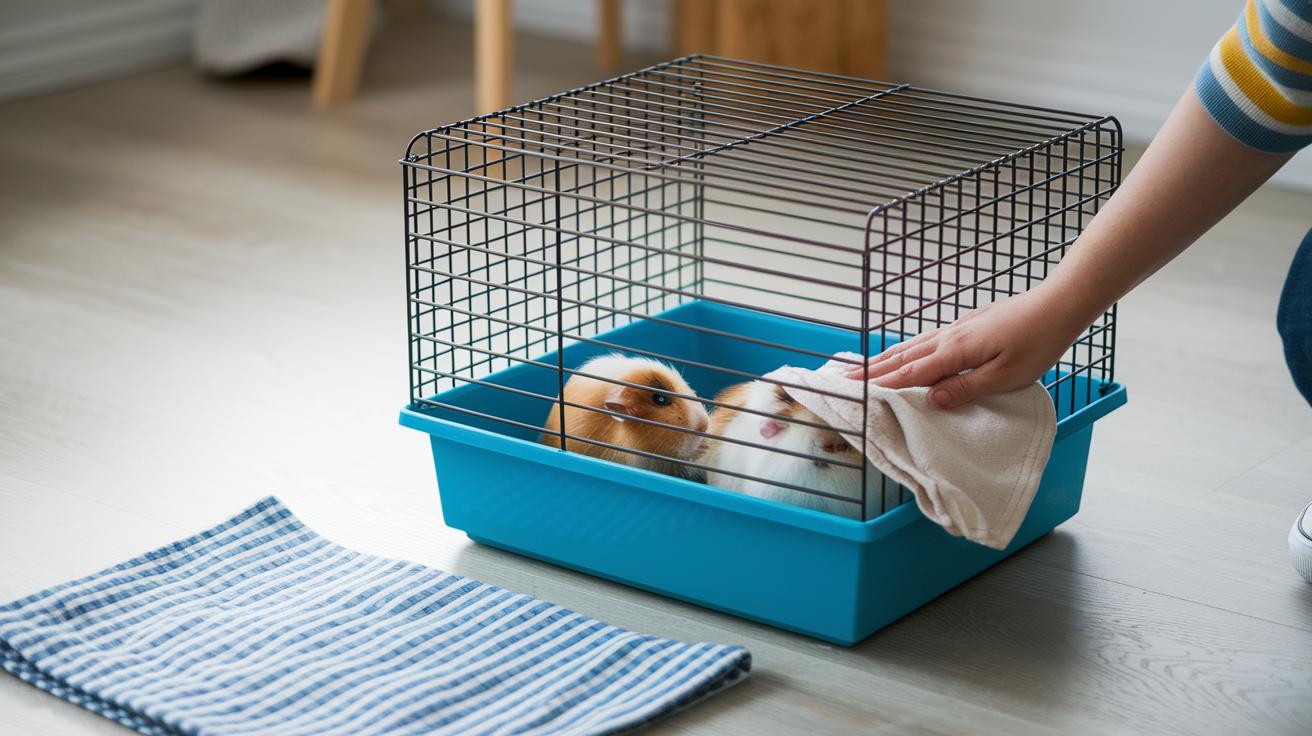
Clean the cage every day by picking up droppings and wet spots as soon as you see them. Change the bedding fully once a week using a gentle, pet-safe cleaner to keep the space clean and safe.
Choose a cage with removable trays and waterproof bases. This design makes it easy to scrub and dry the surfaces quickly, cutting down on build-up that could hurt your pets.
Regularly disinfect all hideouts and accessories. Rinse each piece well to wash off any soap left behind. These steps help stop bacteria and fungus from growing, keeping the cage safe and inviting for your guinea pigs.
Budget-Friendly and Premium Cages for Two Guinea Pigs

Quick verdict: There is a safe and affordable option for every budget. DIY cages averaging about $50–$70 use common materials to create a secure space for your guinea pigs. These basic cages work best if you just need a simple, reliable enclosure.
Mid-range cages, priced between $100 and $150, come with useful features like slide-out trays. These trays make cleaning easier and give you better access to your pets, without a big jump in price.
For a more enriched setup, premium models such as Chartwell’s 2-Tier Hutch cost $200–$250. This cage offers two levels with built-in hideouts and play areas, and quality materials that may help lower long-term vet bills by reducing risks like obesity, breathing issues, and foot problems.
Choose the cage that fits your pet’s needs and your own goals.
Final Words
In the action, we’ve covered every step to create a safe and spacious cage for 2 guinea pigs. We walked through the recommended dimensions, material safety, and ventilation details. We discussed pre-made versus DIY options, assembly steps, bedding layouts, cleaning routines, and budgeting.
Our guide offers clear tips to ensure your pets enjoy a comfortable home that meets their exercise, rest, and enrichment needs.
Enjoy building a lasting, pet-friendly space that keeps your guinea pigs happy and healthy.
FAQ
What does an extra large guinea pig cage for 2 offer?
An extra large cage for 2 provides plenty of space for exercise and exploration, ideally offering 10.5 sq ft or more. This extra room helps reduce stress and conflicts.
What does an outdoor cage for 2 guinea pigs provide?
An outdoor cage for 2 guinea pigs offers a safe, well-ventilated design made of durable, chew-resistant materials to protect your pets and allow them to enjoy fresh air.
How can I find a cage for 2 guinea pigs nearby?
Searching for a cage for 2 guinea pigs nearby means checking local pet stores, online retailers, or community classifieds to find options that suit your location and needs.
What benefits does a guinea pig cage with a divider offer?
A guinea pig cage with a divider gives you the option to create separate zones, reducing conflicts and allowing each pet a dedicated resting or play area when needed.
How can I make a DIY cage for 2 guinea pigs?
A DIY cage for 2 guinea pigs can be built using measured panels and grid systems. This approach lets you customize dimensions and layout to suit your pets’ exercise and hiding needs.
What is the best cage for 2 guinea pigs?
The best cage for 2 guinea pigs meets space, ventilation, safety, and durability requirements. Look for features like non-toxic finishes, secure latches, and easy-to-clean surfaces.
What features do the best cages for guinea pigs include?
The best cages for guinea pigs include ample floor space, strong and non-toxic materials, secure latches to prevent escapes, good ventilation, and surfaces that are easy to clean.
How do indoor guinea pig cages for 2 differ from outdoor ones?
Indoor guinea pig cages for 2 focus on ease of cleaning and a controlled environment, with designs that prevent escapes and include non-toxic materials, unlike many outdoor setups.
What size cage do you need for 2 guinea pigs?
A cage for 2 guinea pigs should be at least 7.5 sq ft, but 10.5 sq ft or more is ideal to provide enough room for exercise, exploration, and proper separation zones.
Can I have two guinea pigs in one cage?
Two guinea pigs can share one cage if the enclosure meets space and safety guidelines. A spacious layout with enrichment zones helps keep them both happy and healthy.
Is a 5ft hutch big enough for 2 guinea pigs?
A 5ft hutch can be suitable if its layout provides at least 7.5 to 10.5 sq ft of accessible living space, along with proper ventilation and secure barriers for safety.
Is a 2×4 cage big enough for 2 guinea pigs?
A 2×4 cage is likely too small for 2 guinea pigs since it does not meet the recommended minimum floor space requirements. It’s best to choose a larger option for adequate comfort.