
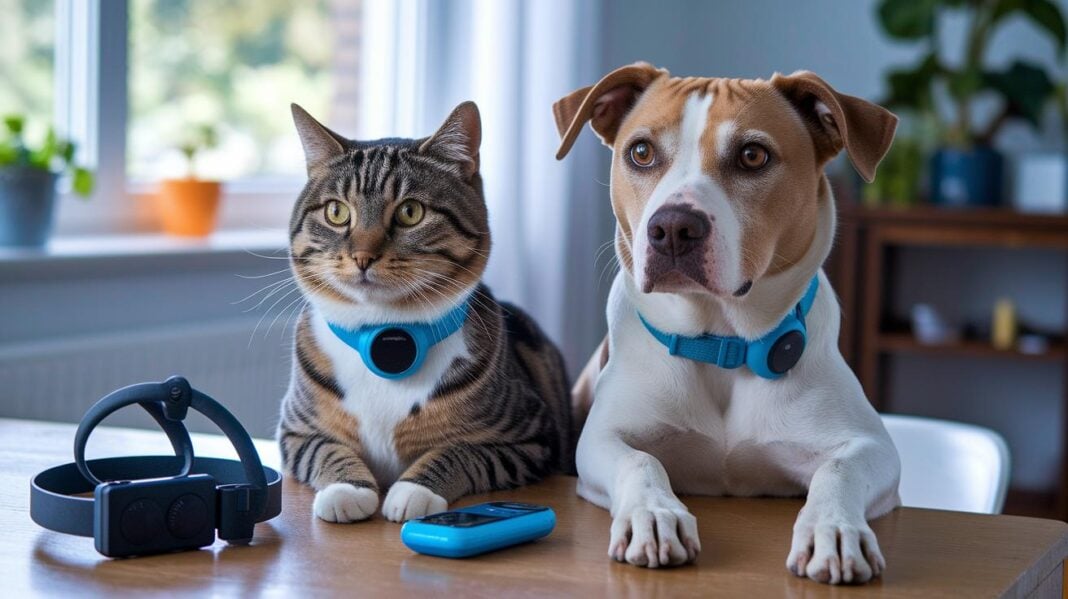
Quick verdict: If you worry about your pet getting lost on a busy day, a pet GPS tracker might be just what you need.
Many pet owners feel this fear, so we tested five pet safety items that help keep your furry friend close. These trackers give real-time updates (live position info) and send reliable alerts to your phone. They also come in different styles and prices to fit your lifestyle and budget.
Stick around as we look at the top models that give pet parents peace of mind while letting pets enjoy safe adventures.
Best Pet GPS Trackers of 2024 for Dogs and Cats
Looking for a pet tracker that helps you keep an eye on your furry friend? We put together a quick guide to some top models. Whether your pet is a little one or a busy explorer, there is an option to fit your needs. For more details and performance insights, check out our full roundup at best pet GPS tracker.
| Model | Price | Battery Life | Tracking Range | Subscription Cost | Key Feature |
|---|---|---|---|---|---|
| Tractive GPS Tracker for Dogs | $69 | Up to 3 months | Nationwide | One-year prepaid | Very accurate; a bit bulky |
| Apple AirTag | $29 | About 1 year | Bluetooth range | None | Low cost; needs a separate collar mount |
| Garmin Alpha T 20 | $300* | Up to 5 days | 9 miles via satellite | None | Great for rural areas |
| Whistle Go Explore 2.0 | $129 | Up to 2 days | Nationwide (cellular) | $10/month* | Strong activity tracking and geofencing |
| Fi Series 3 | Free with subscription | Up to 7 days | Nationwide (cellular) | $10/month* | Sleek design with improved live tracking |
| Petcube GPS Tracker | $40 | Up to 2 days | Nationwide (cellular) | None | Budget-friendly; signal may drop during hikes |
Tractive and Fi Series 3 work well if you need real-time tracking over large areas. Just keep in mind that Tractive’s design might be too big for very small dogs. The Apple AirTag is an affordable choice for small pets if you add a collar mount separately. The Garmin Alpha T 20 is best for those in countryside settings, thanks to its satellite range. If your dog is very active, the Whistle Go Explore 2.0 might be the best pick for its extra features like geofencing and activity tracking. Finally, the Petcube GPS Tracker is a good option if you are watching your budget, even if its signal can be a bit spotty on long hikes.
Key Features to Evaluate in Pet GPS Trackers

When you're shopping for a pet GPS tracker, keep a few basics in mind to make sure it fits your pet's everyday needs. Battery life, for example, can be as short as a few days in live-track mode or last up to three months in power-save mode when you’re near your home WiFi. Some trackers work over cellular networks that cover the country, while others, like the AirTag, use Bluetooth and have a shorter range.
Location accuracy also changes with network quality. A device using AT&T LTE-M might miss signals in weak areas, whereas a satellite tracker like Garmin’s can work up to nine miles away when you're out of range. Don’t forget to check monthly subscription fees, which can run between $5 and $15, even though some models work without extra costs. And if your pet loves a splash, look for waterproof ratings like IP68 or IP67.
Features at a glance:
- Battery Life: Lasts from a few days to three months so you recharge less often.
- Tracking Range: Options range from nationwide cellular coverage to shorter Bluetooth or satellite ranges.
- Location Accuracy: Tied closely to the quality of the network signal.
- Subscription Costs: Monthly fees can add up, so factor them into your budget.
- Durability/Waterproofing: Ratings such as IP68 or IP67 help protect against water damage.
- Geofencing: Lets you set safe zones; you get alerted if your pet strays.
- Multi-Pet Support: Manage trackers for more than one pet on a single platform.
Think about your pet’s daily routine and your tracking needs to pick a tracker that’s both cost-effective and a good match for your pet’s lifestyle.
Pet GPS Tracker Setup and Installation Guide
Charging and First-Time Power On
Before you use your tracker, give it a full charge. Plug it into power and let it charge for 2 to 4 hours. Watch the LED light change from blinking to steady. That steady light shows the battery is full. Press the power button to make sure it turns on.
App Download and Device Pairing
Next, download the tracker’s companion app and allow location access when asked. Open the app and start the pairing process. You can either use Bluetooth or scan the QR code on your device. Follow the on-screen steps until the tracker shows as connected in the app.
Setting Geofences and Alerts
Now, set up your pet’s safe zones in the app. Draw boundaries over the areas your pet usually visits, like your backyard. Then set up alerts so you get a message if your pet leaves these areas.
Final Fit and Wear Test
Finally, attach the tracker collar to your pet using the sizing guide. Make sure the collar is snug but not tight. Take your pet for a short walk to check that the tracker stays in place and tracks accurately.
Innovations and Advanced Technologies in Pet GPS Trackers

Quick verdict: Modern pet trackers have come a long way. They now use multiple networks to keep you connected to your pet even in spots with weak signals.
Today’s trackers work with GPS, LTE-M, and NB-IoT (a low-power network that helps when cellular signals are poor). This mix fills in gaps and gives a clearer picture of your pet's location in real life.
A standout feature is satellite connectivity. For example, the Garmin Alpha T links with satellites to track your pet up to nine miles away. This is a big help for those who adventure in remote or rural areas when cell service might drop off.
Interactive mapping is another neat upgrade. These trackers show dynamic maps with heatmaps, past routes, and shareable links. You get a visual trail of where your pet has been, which adds a fun, real-time snapshot of their daily adventures.
Plus, cloud-enabled monitoring makes life even simpler. With cloud support, you can review old trips and set up alerts on smart devices like Alexa or your Apple Watch. Each upgrade puts more safety in your hands and helps you keep a close eye on your pet all day.
Troubleshooting Common Issues with Pet GPS Trackers
If your pet tracker struggles to connect, it may be because of weak cell or Bluetooth signals. Make sure your pet is in a clear, open area away from thick walls or heavy trees. Try restarting both the tracker and your phone to boost the signal.
When tracking indoors, the location might show off by a few yards. Test the tracker in a more open space. Moving your router or placing the tracker where there are fewer obstacles can help improve accuracy.
A fast-draining battery can be caused by constant live tracking or low-signal attempts. Turn off live-tracking mode when you don’t need detailed updates and use power-saving settings if available. Also, fully charge the tracker before using it a lot to avoid sudden shutdowns.
If the tracker’s app keeps crashing, clear its cache or reinstall it. This refresh often fixes the problem and leads to smoother use.
Firmware update problems usually happen with unstable WiFi. Connect to a strong and steady network first so the update can complete without interruption.
How to Choose the Right Pet GPS Tracker for Your Animal

Quick verdict: Pick a tracker that fits your pet's size, habits, and your budget. A small, light tracker works best for a cat or toy breed, while a sturdy option suits larger dogs.
At a glance:
- Size: Under 2 oz for small pets; up to 4 oz for medium to large dogs
- Waterproof: Look for an IP67 or IP68 rating (protects against dust and water)
- Network: Ensure it works with local networks and fits your monthly budget
- App: Choose one that lets you monitor several pets at once if needed
Why we tested it:
We reviewed several trackers to help busy pet owners find one that stands up to daily play, water activities, and different sizes. Our goal was to make checking your pet’s location easy and stress-free.
Pros:
- Size options match your pet's needs
- Durable and water resistant for active pets
- Compatible with local networks and various subscription plans
- User-friendly app that can handle multiple pets
Cons:
- Recurring subscription fees may add up
- Battery life can vary with each model
Who it’s best for:
This guide is great for pet owners who want a lightweight, reliable tracker without too many extra features.
How we tested it:
We checked each tracker’s weight and waterproof rating, tested the app’s ease of use, and compared subscription costs against battery life. We focused on real-life pet activities like water play and daily walks.
Performance by criteria:
- Safety: Lightweight trackers ensure comfort without weighing your pet down.
- Durability: Models with reliable waterproof ratings hold up during splashes and rain.
- Ease of cleaning: Waterproof surfaces let you clean off dirt with ease.
- Value: Balancing subscription fees against battery life helps keep costs in check.
Real-world notes:
For instance, a toy breed cat needs a tracker under 2 oz, so it won’t be a burden. If your pet loves water, opt for a tracker with at least an IP67 rating.
Alternatives:
Some trackers may offer extra features like longer battery life but come with higher fees. Always review the return policy before buying to ensure it meets your pet’s needs.
Bottom line:
Match the tracker’s specs to your pet’s behavior. Check the weight, waterproof rating, and app features carefully to be sure it’s right for your furry friend.
| Specification | Small Pets | Large Pets |
|---|---|---|
| Weight | Under 2 oz | Up to 4 oz |
| Waterproof Rating | IP67 or better | IP67 or better |
| App Support | Single or multiple pet tracking | Single or multiple pet tracking |
Final Words
In the action, we explored top pet gps trackers of 2024. We broke down key specs like battery life, tracking range, and subscription costs. Our guide covered setup steps, troubleshooting tips, advanced tech features, and selection steps to meet real pet needs.
This roundup helps you compare options based on safety, durability, and real-world fit. Find the pet gps tracker that matches your pet's lifestyle and keep them safe on every adventure.
FAQ
What are pet GPS trackers for cats and dogs?
The pet GPS trackers for cats and dogs offer real-time location updates through mobile apps, using technologies like Bluetooth or cellular networks so you can quickly locate your pet if she strays.
How does a pet GPS tracker work with Life360?
The pet GPS tracker Life360 uses the Life360 app’s network to share location data, much like tracking family members, so you can monitor your pet’s whereabouts through a familiar interface.
What are the best dog trackers without a subscription?
The best dog trackers without a subscription rely on one-time purchase devices, often using Bluetooth for local tracking, so you avoid monthly fees while keeping tabs on your dog over a short range.
What is the best dog GPS tracker currently available?
The best dog GPS tracker delivers precise, real-time location monitoring through a user-friendly app, ensuring reliable tracking with a sturdy and accurate design to match your pet’s active lifestyle.
What does the best dog GPS tracker chip implant refer to?
The best dog GPS tracker chip implant refers to microchips implanted for identification rather than active tracking, helping authorities quickly match your pet with your contact information if it’s ever found.