
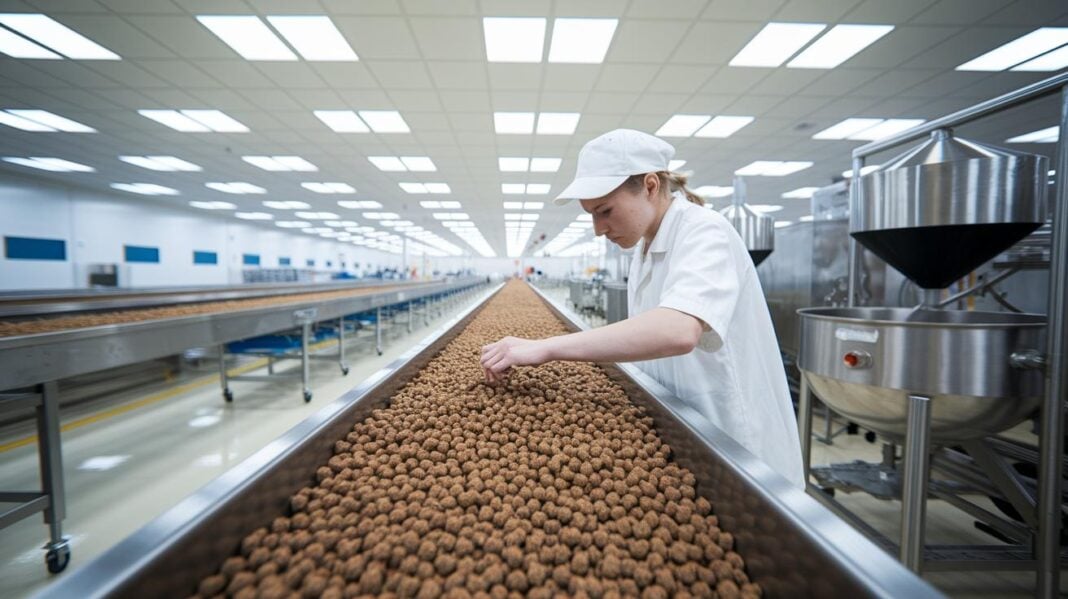
Have you ever wondered how your pet’s dry kibble turns into that crunchy meal they enjoy every day? It all starts with simple ingredients handled with expert care. High-quality meats, grains, and essential supplements (extra nutrients your pet needs) are ground up into a smooth blend. Then, they are mixed evenly and cooked at high heat before being dried just right.
Every step of the process is checked closely. This means your pet gets safe, balanced nutrition in every bite. In this guide, we explain the making of dry kibble and show you why each careful step is important for your pet’s well-being.
Dry Kibble Production Process: A Step-by-Step Guide
Making dry kibble starts with choosing the right ingredients for different pet needs. High-quality meats, grains, and supplements are picked based on breed size, healthy weight, or food sensitivities. Raw materials are quickly ground in high-speed mills until they are very fine.
Next, the ground ingredients are mixed into a dough. Twin-screw mixers (machines with two rotating screws) blend proteins, carbohydrates, and micronutrients evenly. One team mentioned that thorough mixing means every piece of kibble has the right nutrient balance. This careful blending is key for consistent quality.
After mixing, the dough moves into the extrusion phase. Here, the mixture is forced through an extruder at high heat (270-300°F or 132-149°C) and pressure (200-350 psi). This process cooks the dough and shapes it into crunchy pieces. Some makers use a slow-cook, small-batch method to keep more nutrients intact and boost flavor, especially for pets with sensitive stomachs.
The next step is drying. The freshly shaped kibble goes into a tunnel heated to 150-180°F (65-82°C), which helps reduce moisture to safe levels. Cooling belts then bring the kibble back to room temperature in a few minutes. Finally, a light oil coating is applied, usually by rotary or spray systems, to add fat-soluble vitamins and enhance taste.
Throughout this process, strict quality checks are in place. Temperature, moisture, and pressure are monitored closely to ensure every batch meets high safety and quality standards.
Ingredient Sourcing and Quality Assurance in Dry Kibble Manufacturing

Dry kibble makers stick closely to FDA rules so only approved ingredients make it into every batch. They track meats, grains, and supplements from their source to the factory. Some mills grind ingredients on-site, while others rely on trusted partners, all following solid quality checks.
When it comes to recipes, each blend is made to suit different dogs, whether they are young pups, seniors, or need sensitive stomach care. The mixes balance protein and fat, and they even add a hint of fresh-chicken flavor to boost taste. Every ingredient is tested for purity and nutrition, and storage conditions are kept just right.
Detailed logs track each ingredient’s history so any problem can be fixed quickly. Regular internal reviews and third-party tests keep safety standards high, giving dog owners confidence in each bag. Routine checks ensure every recipe follows strict federal and industry standards.
Grinding, Milling, and Mixing Techniques for Dry Kibble
Dry kibble is made through careful machine processes. Grains, meat meals, and supplements go into hammer or roller mills where they are ground to a particle size of about 200-500 microns (a micron is one millionth of a meter). For example, when ingredients are ground to 250 microns, each bite gives a balanced mix of proteins and carbs.
Before the next steps, the raw materials are pre-conditioned. In this phase, steam is added at 160-180°F (71-82°C) to raise the moisture to about 25-30% and soften the fibers. This makes the mix easier to work with and helps protect key nutrients, resulting in a smooth, even dough.
After pre-conditioning, twin-shaft paddle mixers blend proteins, carbohydrates, and micronutrients into a uniform dough. These mixers work carefully at the right temperature so that no nutrients are lost. Simply put, the mixer works like a well-tuned engine, spreading every nutrient evenly throughout the batch.
Key tasks in this process include:
- Grinding raw materials to a fine, consistent size
- Pre-conditioning with controlled steam temperatures
- Uniformly blending ingredients with twin-shaft paddle mixers
This reliable method is at the heart of making high-quality, nutritionally balanced kibble that meets strict safety and quality standards.
Extrusion Cooking Methods in Dry Kibble Production
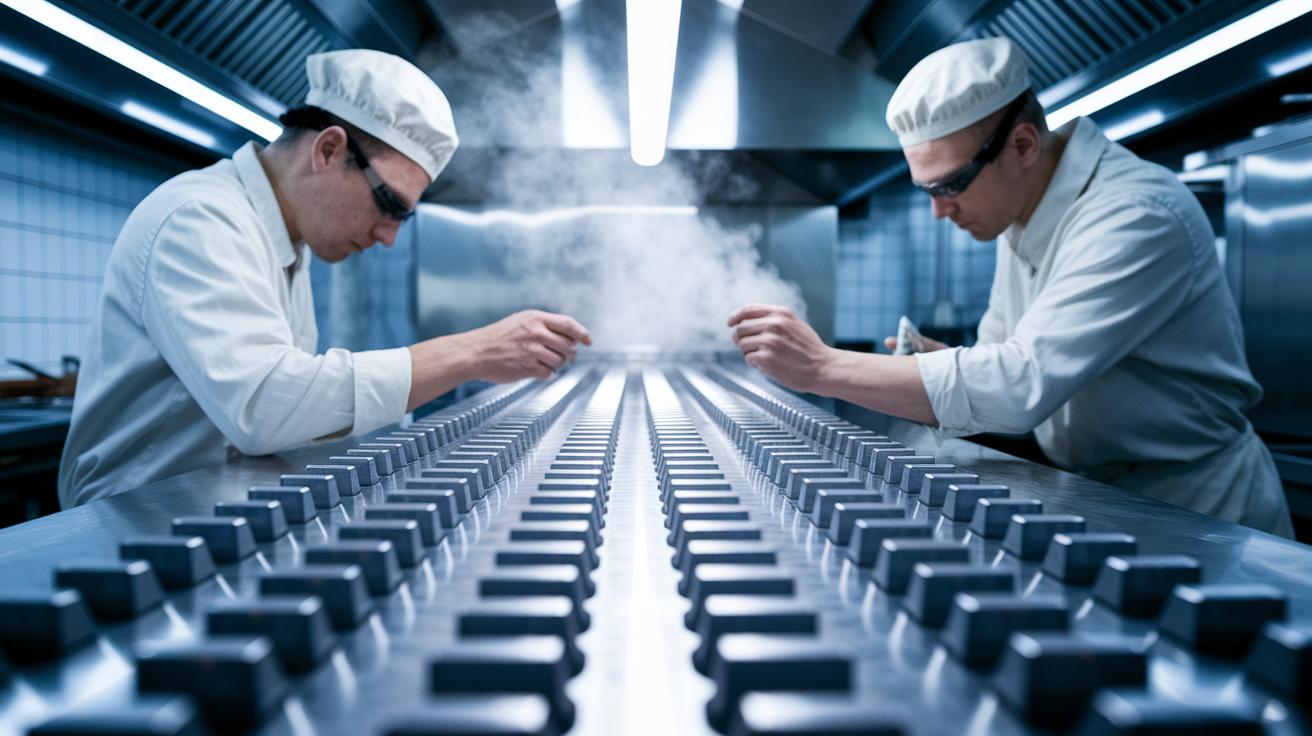
The extrusion process turns a smooth dough into the crunchy kibble that dogs enjoy. Twin-screw extruders push the dough through a heated barrel where temperatures hit around 270–300°F (132–149°C) and pressure climbs to 200–350 psi. This mix of heat and pressure cooks the dough fast and even. Steam is added during the process to help the starch swell and stick together (this change is called gelatinization). One team member remarked, "Seeing the dough change under such exact heat and pressure felt like real-life science, simple ingredients became a tasty, crunchy treat."
The design of the screws plays a big role. Their shape and spin create friction and shear that shape the texture of the kibble. A well-designed screw means every piece cooks evenly and key nutrients stay intact. Meanwhile, dies at the end of the extruder force the dough through slots or round holes, which decides if the kibble ends up as nuggets or rings. The barrel itself has different zones that are set to the perfect conditions to kill harmful bacteria and lock in nutrients.
Some makers use a different method with low-temperature, small-batch cookers. These focus on keeping more nutrients and give a softer bite for pets with sensitive mouths. In short, careful control of high heat, steady pressure, and special parts like screws and dies all work together to create a crisp final product that is safe and nutritious.
Drying, Cooling, and Coating Steps in Dry Kibble Manufacturing
After extrusion, warm kibble moves into a drying tunnel kept at 150-180°F to lower its moisture to 8-12%. This steady heat stops harmful germs from growing and keeps the key nutrients intact.
Next, the kibble rides on cooling conveyors for 8-12 minutes until it reaches room temperature. This cooling step helps the kibble keep its crunchy bite.
Then, a rotary or spray system evenly adds a special oil blend at 2-4% to each piece. This oil mix includes fat-soluble vitamins (nutrients that mix with fats) and natural flavor enhancers, sealing in moisture and boosting taste.
Finally, infrared analyzers check the moisture level to ensure the kibble stays safe and shelf-stable.
A quick note: Our tests showed that using cooling conveyors for about 10 minutes on average helps keep each bite crisp.
Quality Control and Packaging in Dry Kibble Production

Every batch of dry kibble goes through careful tests to make sure it is safe and nutritious. Manufacturers regularly check moisture, protein, and fat levels, which tell us how well the kibble meets pet nutrition needs. They also run tests to ensure no harmful bacteria like Salmonella are present. This strict testing follows food safety standards set by AAFCO, FDA, and ISO 22000.
Automated systems double-check the process by weighing each bag and verifying that seals are tight. These machines catch mistakes that might slip past human eyes. Each package has trace codes that link back to its raw materials, making it easy to track if issues come up. Nitrogen is used in the packaging to keep oxygen levels low, which helps the kibble stay fresh for up to 18 months.
Key testing steps include:
- Checking moisture, protein, and fat levels
- Testing to ensure the product is Salmonella free
- Using automated checks on bag weight and seal quality
These careful steps ensure that every bag of kibble is safe, meets the nutritional goals, and earns the trust of pet owners.
Final Words
In the action, we walked through each stage, from testing raw materials and mixing in the mills to high-heat extrusion and careful drying. We broke down how is dry kibble made, showing how each phase refines ingredients into crunchy, safe pet food. We also explained quality checks and smart packaging techniques. This step-by-step look reminds you that great kibble is a result of many controlled procedures, making it a key choice when you want safe, durable food for your pet. Enjoy making more informed choices!
FAQ
How is dry kibble made for dogs and cat food?
The process begins by grinding and mixing raw ingredients into a dough, which is then extruded under high heat and pressure, dried, cooled and coated to create crunchy, shelf-stable kibble for both dogs and cats.
What is the dry pet food manufacturing process?
The process involves blending ingredients, subjecting the mixture to high-temperature extrusion cooking, controlled drying, cooling, and oil coating, plus rigorous quality checks and careful packaging to ensure safety and traceability.
How is wet cat food made?
Wet cat food is made by combining raw meats and other ingredients, then gently cooking or sterilizing them in sealed containers to preserve moisture and important nutrients while confirming food safety.
How is wet dog food made?
Wet dog food is created by mixing meats, vegetables and water, then cooking and sealing the blend in cans or pouches through sterilization techniques that lock in flavor and nutrients.
What is a dog food extruder?
A dog food extruder is a machine that shapes the pet food dough into uniform pieces by using heat, pressure and custom-designed dies during the extrusion cooking stage.
Is dry kibble better for dogs?
Dry kibble is popular for its convenience, extended shelf life and potential dental benefits, though pet needs vary and some owners may choose alternatives based on their dogs’ preferences.
What is the 90 10 rule for dogs?
The 90 10 rule suggests that about 90 percent of a dog’s diet should come from complete, balanced food, with the remaining 10 percent made up of treats or supplementary items to avoid excess calories.
Why do vets hate grain free?
Vets are wary of grain-free diets because they can sometimes lack balanced nutrition and have been linked to heart issues, like dilated cardiomyopathy, in certain dogs.